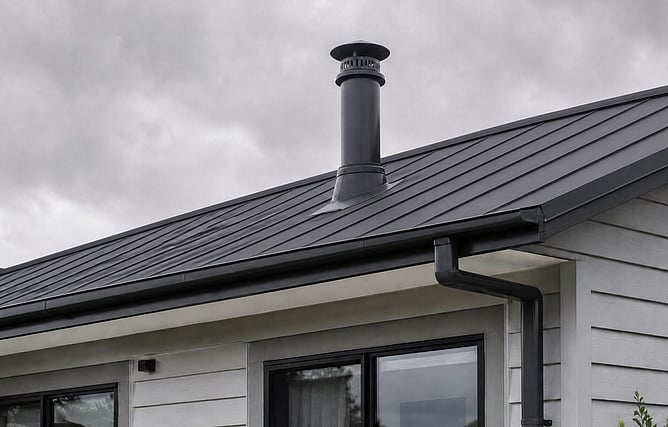
Installing a wood fire changes more than the room inside the home. It also changes part of the roofline. Once a flue passes through the roof, that area needs to handle both heat and weather properly.
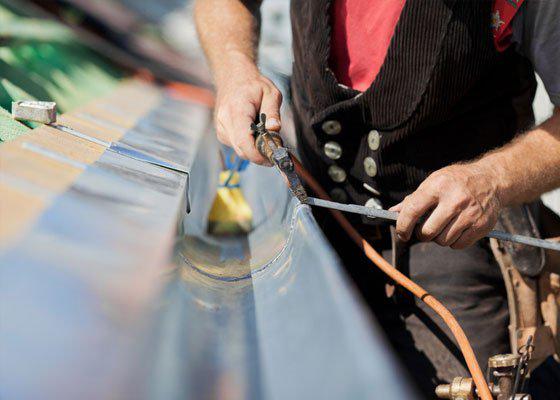
For homeowners in Hamilton and Waikato, that matters because the roof edge is already doing a big job. At Fine Line, we work across the region on continuous spouting, gutter replacement, fascia, re-spouts, and internal-to-external conversions, so we regularly deal with the water-management side of roof performance.
A fireplace installation may be handled well inside the home, but it is still worth checking how the work affects the roof outside. Small issues around penetrations, flashings, and drainage paths can lead to bigger maintenance problems later.
Start with the flashing around the flue
The first thing to check is the flashing. This is the part that helps seal the flue penetration where it passes through the roof. If it is not fitted properly, water can track into places it should not.
You do not need to diagnose the flashing yourself. You just need to look for clues. Water marks, damp spots, staining near the ceiling line, or unusual runoff near the roof edge can all suggest that the area deserves a closer look.
This matters even more in homes with modern long-run roofing. Water moves quickly off metal roofs, so any weakness around a penetration can show up fast during heavy rain.
Check how water moves below the flue
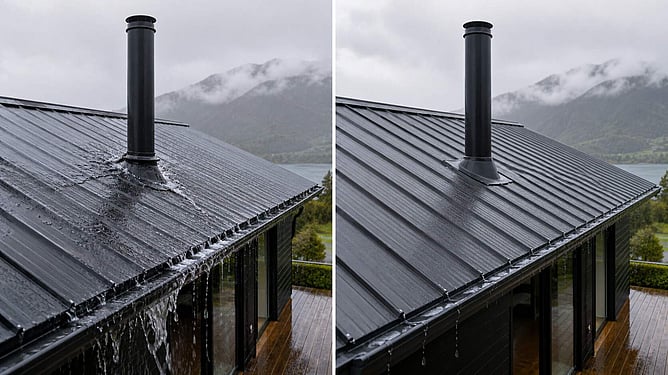
A wood fire flue sits higher up, but the effects can show lower down. Once rain hits the roof, it still needs to travel cleanly into the spouting and downpipes.
If the drainage path has changed, one section of guttering may end up carrying more water than before.
That can show up as overflow, splash marks, or repeated wetting in one part of the fascia or wall below. Fine Line’s work is built around solving exactly these kinds of roof-edge water issues, whether that means new continuous spouting, repairs, or full gutter replacement.
If one area suddenly starts wearing faster after roof work, it is worth asking whether the issue started higher up.
Look at the condition of the fascia and spouting
Any roof penetration adds another detail to a system that already depends on alignment and good water control. That is why it is smart to inspect the fascia and spouting after the installation is complete.
Look for sagging sections, fresh staining, water marks under joins, or corners that seem to stay wet longer than the rest. These signs do not always mean the fireplace installation caused the problem. But they can reveal weak points that had been easy to miss before.
Fine Line also notes that many Waikato homes need upgrades from older or leaking setups, including conversions from internal gutters to external systems. That makes a roofline check even more useful on homes that already have some age or history behind them.
Debris and access still matter
A new flue does not remove the need for regular maintenance. Leaves, grit, and roof debris can still wash down into the guttering. If that area blocks up, rainwater may overflow before you realise anything is wrong.
Tree-heavy streets and seasonal debris can make this more noticeable around Hamilton and the wider Waikato. You can read our advice on how trees and routine maintenance affect the long-term performance of spouting systems in the region here.
This is why it helps to think of the roofline as one working system. The flue, flashing, roofing, fascia, spouting, and downpipes all affect each other.
A wood fire upgrade can be part of a wider home project
Many homeowners install heating as part of a broader renovation or comfort upgrade. In that context, the roofline often deserves attention too.
Kapiti Woodfires, for example, supplies and installs wood fires for homes across Wellington, the Kapiti Coast, and nearby areas, offering certified installation and clean-air-compliant models.
That does not make the roof-edge details automatic. It just means homeowners should remember that any improvement to the roof is a good time to check how rainwater is managed as well.
Final thoughts
After installing a wood fire, the roofline deserves a quick but careful review. The main things to check are the flashing, the way water runs below the flue, and the condition of the fascia and spouting.
For Hamilton and Waikato homeowners, this is less about overthinking and more about prevention. If the roof edge is handling water properly, the heating upgrade is far less likely to create an exterior maintenance problem later.
Fine Line’s focus on dependable fascia and spouting solutions across the region reflects how important that long-term water control really is. Give us a call if you need your guttering sorted.