
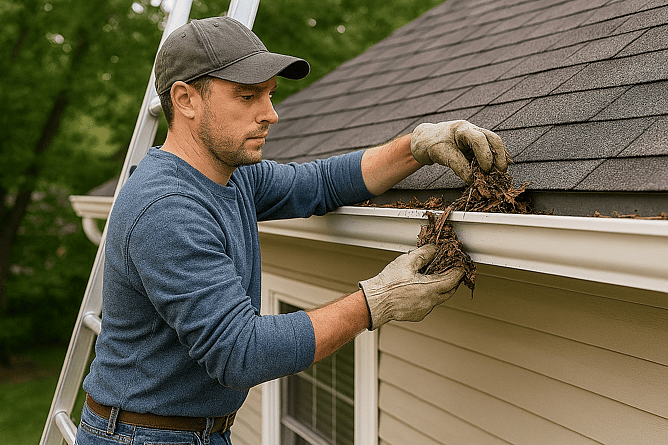
Overflowing gutters are often treated as a minor maintenance issue. Water spills over during heavy rain, then everything seems fine once the weather clears.
In reality, overflowing gutters are often an early warning sign that a property’s wider water management system is under strain.
In Waikato conditions, where rainfall can be heavy and consistent through winter, roof drainage plays a much more important role than many homeowners realise.
Gutters Are the First Step in Water Control
Gutters are designed to capture rainwater from the roof and direct it safely into downpipes. From there, water is carried away from the building and into ground drainage systems.
When this process works properly, water is controlled and moved away efficiently.
When it doesn’t, overflow begins at the roofline and spreads downward into other parts of the property.
That is where small issues can start to become bigger problems.
Why Overflowing Usually Starts Small
Most gutter overflow problems do not happen suddenly.
They usually develop over time due to:
gradual leaf buildup
partially blocked downpipes
incorrect fall or alignment
aging or damaged gutter sections
rainfall exceeding system capacity
In suburbs across Hamilton and surrounding Waikato areas, trees and seasonal debris are a common contributing factor. Even small blockages can reduce flow enough to cause overflow during heavier rain.
How Roof Overflow Impacts Ground Drainage
Once water spills over the edge of the gutter, it lands directly around the base of the property.
This concentrated flow can quickly overwhelm areas that are not designed to handle it.
Over time, this may lead to:
saturated soil near foundations
pooling around paths or driveways
erosion in garden beds
increased pressure on stormwater systems
water tracking toward low points on the property
This is where roof drainage issues begin to overlap with ground-level drainage performance.
In some cases, persistent overflow can highlight broader stormwater concerns that may require assessment of underground drainage systems as part of the wider property setup.
The Connection Between Roof Drainage and Stormwater Systems
Gutters are only one part of a much larger system.
Once water leaves the roof, it relies on downpipes and ground drainage to carry it away effectively. If any part of that chain is underperforming, water movement becomes inconsistent.
That can result in uneven loading of stormwater systems, particularly during periods of heavy rainfall.
For properties experiencing ongoing drainage stress, it is often worth reviewing both roof and ground-level systems together to understand how water is moving across the site.
Why Small Overflow Issues Should Not Be Ignored
One of the main risks with gutter overflow is that it often appears manageable at first.
However, repeated overflow events can gradually affect:
soil stability around the home
paving and surface settlement
exterior wall moisture levels
long-term drainage capacity
foundation exposure to excess moisture
These changes tend to happen slowly, which is why they are often missed until more noticeable damage appears.
The Importance of Whole-System Maintenance
Effective water management relies on all parts of the system working together.
Gutters, downpipes, and ground drainage should be viewed as connected rather than separate components.
When one part is not performing correctly, it places extra pressure on the rest of the system.
This is why regular inspection of roofline drainage is so important, particularly before and during wetter seasons in Waikato.
Where issues extend beyond simple blockages, some properties may require more detailed drainage assessment to ensure water is being moved away from the building effectively.
Protecting Your Property From Long-Term Damage
Overflowing gutters are often one of the earliest visible signs that a property’s drainage system needs attention.
Addressing these issues early can help reduce the risk of more serious and costly damage later on.
This includes preventing long-term moisture exposure around foundations, protecting landscaping, and maintaining the performance of surrounding drainage systems.
For homeowners looking to improve or maintain their roof drainage systems, Fine Line Fascia & Spouting provides practical support with guttering, fascia, and downpipe solutions designed for Waikato conditions.
If you’re noticing overflow issues or planning exterior maintenance, contact the team at Fine Line Fascia & Spouting for advice or a quote.