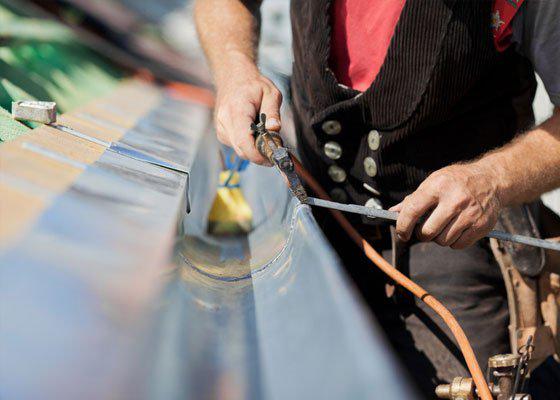
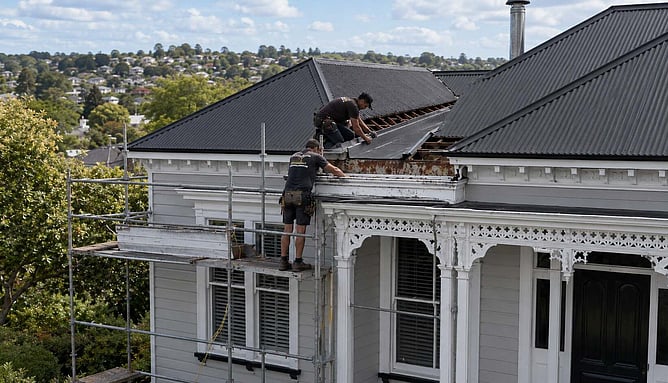
Renovating an older Waikato home often starts with the parts of the property we can see. A tired roof might need replacing, exterior paint may be peeling, cladding may need attention, or the interior may be ready for a complete refresh.
With so many visible priorities competing for attention, it is easy for less obvious parts of the home to fall further down the renovation list.
Internal gutters are a good example. Because they sit within the roofline rather than hanging visibly along the outside edge of the house, their condition can easily be overlooked.
Yet on an older home, an ageing internal gutter system can have a significant impact on how well the property manages rainwater.
For homeowners planning substantial renovation work, checking the gutters early can help identify problems before new roofing, fascia, soffits, paintwork, or other exterior finishes are completed.
In some cases, an internal gutter replacement can be incorporated into the renovation itself, avoiding the disruption of returning to recently finished areas later.
Why Internal Gutters Matter During an Older Home Renovation
Internal gutters perform the same basic job as external spouting. They collect rainwater from the roof and direct it towards outlets and downpipes. The important difference is where they are positioned.
External gutters are generally easy to see from around the property. Internal gutters are built into the roof structure or positioned behind the fascia line, which makes them much less visible from the ground.
That concealed position is one of the reasons problems can go unnoticed.
A small issue with external spouting may result in visible dripping or overflowing around the outside of the house. With an internal gutter, water that escapes from the system may be closer to roofing components, soffits, framing, ceilings, or other concealed parts of the building.
This does not mean every older internal gutter needs to be replaced. Many systems continue to perform well when they have been properly installed and maintained.
However, if we are already planning significant work on an older property, it makes sense to understand the condition of the existing drainage system before building new finishes around it.
Common Problems With Older Internal Gutter Systems
Age alone does not tell us whether a gutter system needs replacing, but older homes can present several issues that deserve closer inspection.
Corrosion and General Deterioration
Metal guttering that is exposed to water, debris, temperature changes, and environmental conditions throughout its working life can have issues. Over time, some deterioration can develop around the joints, outlets, corners, or sections where moisture can linger for longer periods.
With an external gutter, corrosion can often be spotted relatively easily. Internal gutter deterioration can be harder to identify until there are more noticeable symptoms.
During a renovation, we want to know whether the gutter itself is still in sound condition. There is little benefit in completing new roofing or exterior finishes only to discover shortly afterwards that the concealed guttering also requires major work.
Poor Fall and Standing Water
Gutters rely on the correct fall to move water towards their outlets.
In an older property, changes can occur over many years. Building movement, alterations, past repairs, or changes to surrounding roof components can all affect how effectively water drains.
If sections of an internal gutter hold water after rainfall, the underlying reason should be investigated.
Standing water places continued moisture against the gutter material and can also encourage leaves, dirt, and other debris to settle. Clearing the debris may improve the immediate situation, but if the gutter itself no longer falls correctly, the problem can return.
Ageing Joints and Previous Repairs
Many older Waikato homes have been repaired and upgraded multiple times over the decades. Internal gutters are often part of that history.
A previous repair is not necessarily a concern. A properly completed repair can extend the life of a system considerably. The bigger question is whether the gutter has reached the point where repeated patching is becoming less practical than a more complete solution.
If we find several old repairs, deteriorating seams, persistent leak areas, or a history of recurring problems, an internal gutter replacement may be what’s required to provide a better long-term outcome than continuing to address the individual sections.
Waikato Weather Can Quickly Reveal Gutter Weaknesses
A rainwater system needs to perform when conditions are at their worst, not only during light showers.
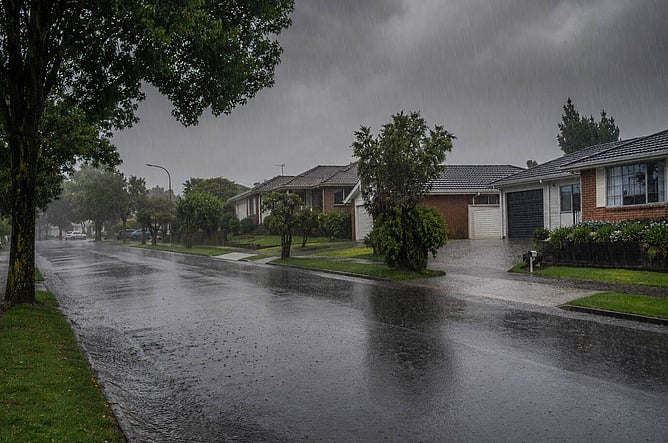
Hamilton and the wider Waikato regularly experience periods of sustained rain, and heavier downpours can place considerable demand on roofs, gutters, outlets, and downpipes. Trees and surrounding vegetation can also contribute leaves, organic material, and debris that reduce drainage capacity if gutters are not maintained.
A system that appears to cope during moderate rainfall may behave differently when a large volume of water reaches the roof in a short period.
This is particularly important with internal gutters. Because they sit within the roofline, overflow or leakage may have more opportunity to affect surrounding building components.
When we assess an older gutter system, we therefore look beyond whether it appears tidy from the visible sections. We need to consider how well the complete system is likely to perform when rainfall places greater pressure on it.
Signs Your Internal Gutters Need Attention Before Renovation
Some internal gutter problems remain hidden, but there are warning signs homeowners can look out for.
Water staining around ceilings, soffits, walls, or roof edges should always be investigated before renovation work covers or refinishes the affected area. Moisture can travel from its original source, so staining does not automatically mean the internal gutter is responsible. It does mean there is a reason to find the source before moving forward.
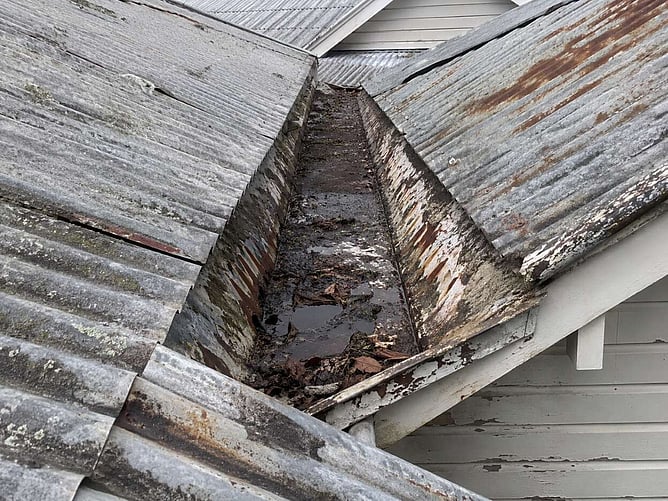
Visible rust, flaking coatings, worn seams, deteriorated sections, or corrosion around gutter outlets can also indicate that the system deserves further assessment.
Another useful sign is water remaining in the gutter long after rainfall has stopped. This may point to a blockage, inadequate fall, or changes within the gutter or roofline.
We also pay attention to the history of the property. If an internal gutter has needed several leak repairs over a relatively short period, continuing to patch isolated sections may no longer be the most effective approach.
Sometimes there is no obvious symptom at all. The homeowner simply does not know when the guttering was installed, what work has previously been completed, or how much life remains in the system. If a large renovation is planned, that uncertainty alone can make an inspection worthwhile.
Should We Choose Internal Gutter Replacement or Convert to External Spouting?
Once we identify that an older gutter system needs work, the next question is what type of solution is most appropriate.
There is no single answer that suits every Waikato home.
When Internal Gutter Replacement Makes Sense
In some properties, retaining the existing internal gutter arrangement is the most suitable option.
A new system can be designed and installed to work with the existing roof configuration while replacing deteriorated materials and addressing drainage issues identified during the assessment.
An internal gutter replacement may be an appropriate option when the roof design naturally suits concealed guttering, such as when the surrounding structure remains in good condition, or when converting the gutter layout would require any unnecessary alterations.
The important point is that replacement should address the system as a whole. Simply recreating an older problem in new material does not provide a good long-term result. Fall, outlets, capacity, adjoining roof components, and drainage all need to be considered.
When an Internal-to-External Conversion Is Worth Exploring
Some homes may be suitable for converting internal gutters to external fascia and spouting.
This can provide practical advantages because external gutters are generally easier to see, access, inspect, clean, and maintain. If a problem occurs in the future, it may also be more obvious.
A conversion can be particularly worth discussing when extensive fascia, roofing, or roof-edge work is already part of the renovation.
However, conversion is not automatically the better option. Roof design, water flow, downpipe locations, appearance, structural configuration, and the rest of the renovation all need to be considered before deciding on the best approach.
The Best Time for Internal Gutter Replacement Is Before Finishing Other Exterior Work
Renovations become much easier when related work is planned in the right order.
If a property needs roofing, fascia, soffit, painting, or other roofline work, we recommend assessing the internal gutters early in the process.
This gives everyone involved in the project a clearer understanding of what needs to happen before finishes are completed.
For example, if an internal gutter replacement requires access to parts of the fascia or roof edge, it is usually preferable to complete that work before those areas are freshly painted or finished. The same principle applies when scaffolding is already required for another part of the renovation.
Planning the work together can also reduce unnecessary duplication. Trades can coordinate around the same roofline rather than one contractor completing work that later needs to be disturbed by another.
For homeowners, this can make the renovation easier to manage and reduce the risk of unexpected guttering work appearing after the main project is supposedly finished.
Coordinate Roofing, Fascia, Gutters and Downpipes as One System
A roof is only one part of the home’s rainwater management.
Water needs to move from the roof surface into the gutter, through the outlets, down the downpipes, and safely away from the building. If one part of that chain is not working properly, upgrading another component may not solve the wider issue.
This is why we encourage homeowners to think about roofing, fascia, gutters, and downpipes together when renovating.
If a roof is being altered or replaced, the amount and direction of water entering the gutters may need to be reconsidered. If fascia work is planned, that may affect how a new gutter or external spouting system can be installed. Downpipe position and capacity also matter because a gutter cannot drain effectively if water cannot leave the system efficiently.
Looking at the complete setup helps avoid decisions being made in isolation.
Don’t Cover an Old Water Problem With New Finishes
One of the easiest mistakes during a renovation is improving everything around an ageing gutter system without first checking the gutter itself.
A home may receive new exterior paint, repaired fascia, updated soffits, or even a completely new roof, while an old concealed drainage system remains untouched.
If that system then starts leaking, access may require work around areas that have only recently been finished.
That does not mean internal gutter replacement should automatically become part of every renovation. It means the decision should be deliberate.
If the existing gutters are inspected and found to be sound, homeowners can continue their renovation with greater confidence. If deterioration is discovered, there is an opportunity to address it while related work is already being planned.
Either outcome is better than simply assuming that a hidden system is still performing correctly.
What We Check When Assessing Internal Gutters
When we inspect an internal gutter system, we look at more than one visible problem.
We consider the overall condition of the guttering material, including any corrosion, deterioration, seams, joints, outlets, and previous repairs. We also look for evidence of ponding and assess whether the gutter appears to have sufficient fall.
The surrounding roofline matters too.
Fascia condition, roofing configuration, downpipe locations, accessibility, and the wider renovation scope can all influence the most appropriate solution.
We also want to understand the history of the issue. A single isolated repair can be very different from a gutter that has experienced recurring leaks in several locations.
By taking a broader view, we can determine whether maintenance or repair is still the appropriate action, and whether an internal gutter replacement is the better option, or whether conversion to external spouting deserves consideration.

Use the Renovation to Future-Proof the Home
A good renovation is not only about making a home look newer. It is also an opportunity to improve how the property performs.
That means considering the parts of the building that are less visible as carefully as the finishes everyone notices.
Internal gutters may not be one of the exciting parts of a renovation, but they play an important role in managing water around the home. Dealing with an ageing or unsuitable system at the right stage can help protect the roofing, fascia, soffits, and other work being completed around it.
It can also make future maintenance simpler, particularly if the renovation provides an opportunity to improve access or change the gutter configuration.
Renovating in Hamilton or the Waikato? Check the Internal Gutters Early
If you are planning work on an older Hamilton or Waikato home and the property has concealed guttering, it is worth checking the system before the renovation progresses too far.
We can assess the existing setup, identify signs of deterioration or drainage problems, and look at how the guttering fits with the wider project.
Depending on the home, the right approach may be to retain the current system, carry out targeted work, complete an internal gutter replacement, or investigate an internal-to-external gutter conversion.
The important thing is to make that decision while the renovation is still being planned.
By dealing with the gutters at the right stage, we can help ensure the finished roofline does more than look good. It can also manage Waikato rainfall effectively and support the long-term performance of the home.
Frequently Asked Questions About Internal Gutter Replacement
How do I know if my older home has internal gutters?
Internal gutters are usually positioned within the roofline rather than hanging visibly from the outer edge of the fascia. Depending on the design of the home, they may be difficult to see from ground level. If you are unsure what type of system your property has, an inspection can confirm the gutter layout and condition.
Does every older internal gutter need replacing?
No. Age is only one factor we consider. Some older systems may still be performing well, while others may have corrosion, poor fall, repeated leaks, or previous repairs that make replacement worth considering. We recommend assessing the actual condition of the system before deciding.
What does an internal gutter replacement involve?
The exact process depends on the design of the property and the condition of the surrounding roofline. In general, it involves removing the deteriorated guttering, preparing the area, and installing a new system that is correctly configured for drainage. Roofing, fascia, outlets, and downpipes may also need to be considered as part of the work.
Can internal gutters be converted to external spouting?
In many cases, an internal-to-external conversion may be possible, but suitability depends on the design of the house. Roof shape, fascia configuration, drainage requirements, downpipe locations, and appearance all need to be assessed before recommending a conversion.
Should internal gutter replacement happen before a new roof?
Ideally, guttering and roofing should be planned together. The best sequence depends on the property, but coordinating both jobs early can help avoid disturbing recently completed work and ensure the roof drainage system functions as a whole.
Can leaking internal gutters cause damage inside a home?
They can. Because internal gutters sit within or close to the roof structure, escaping water may affect concealed building areas depending on the location and severity of the problem. Water stains, dampness, or unexplained moisture should therefore be investigated rather than simply covered during renovation work.
Do you provide internal gutter replacement in Hamilton and the wider Waikato?
Yes. We work with homeowners across Hamilton and the wider Waikato on guttering, fascia, re-spouting, internal gutter replacement, and internal-to-external gutter conversion projects. If you are renovating an older property, we can assess the existing system and discuss the most practical option for the home.
Need help with your internal gutter system? Get in touch with our team at Fine Line now.
Quotes/Enquires: Janine 021 124 4972
Operations Manager/Director: Justin 021 385 569
Email: janine@fineline.nz