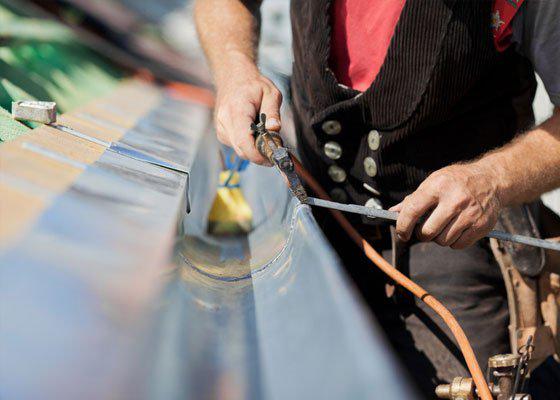

Most people focus on looks when choosing spouting, but did you know local weather, debris, changes to the roof like a chimney flue addition, and drainage challenges should guide your decision? At Fine Line, we see these factors influence nearly every Hamilton and Waikato spouting job.
A system that works well in one part of New Zealand may not be the best fit elsewhere. Rainfall patterns, humidity, nearby trees, and even salt in the air can change how well spouting performs. That is why regional conditions should be part of the decision from the start.
Waikato homes face a different mix of pressure
In the Waikato, we often deal with sudden heavy downpours, humid summers, and a lot of tree debris. In our guidance we also point to leafy suburbs and rural properties as common sources of blocked gutters and downpipes.
In places like Hamilton, Cambridge, Pirongia, and Te Awamutu, that mix can put real pressure on older systems.
Tree debris is not just a cleaning issue. Leaves, twigs, pine needles, and seed pods can trap water, add weight, and speed up wear. Once water stops moving freely, overflow and sagging often follow.
That is one reason continuous spouting makes sense for many Waikato homes. Here at Fine Line, we note that fewer joins mean fewer weak points for leaks and fewer spots for debris to catch. It also gives the system better structural strength over long runs.
Coastal regions bring different problems
Not every region is dealing with the same pattern. Coastal Northland, for example, adds humidity, heavy rain, and salt exposure to the equation.
Flood Roofing’s Kerikeri climate guidance highlights those conditions clearly, and its Spouting Kerikeri page frames replacement around local weather demands across Kerikeri and the Bay of Islands.
That does not make one region harder than another. It simply means the stress points are different. In Waikato, tree debris and heavy runoff are often the big issues. In coastal areas, corrosion and exposure may move higher up the list.
The best system is the one that matches the site
This is where one-size-fits-all advice can go wrong. Homeowners sometimes assume any new spouting profile will do the job. In reality, the right choice depends on roof shape, water volume, fall, downpipe placement, and the conditions around the house.
At Fine Line, we look at the full drainage path. Downpipes matter just as much as the gutter profile itself. If water cannot move off the roofline properly, even a good-looking installation can underperform in heavy rain.
Older internal gutters also need careful review. At Fine Line, we specialise in internal gutter replacement and internal-to-external conversions because some older systems continue to pose a risk during rain events. In those cases, climate pressure tends to expose weaknesses more quickly.
Why local knowledge still matters
Good spouting advice should reflect local conditions, not generic product claims. At Fine Line we serve Hamilton and the wider Waikato, and our work is shaped by the weather, housing stock, and maintenance issues common in this region.
That includes everything from tree-heavy suburbs to rural sites with pine needles, moss, and long roof runs.
That local view also helps when deciding between repair and replacement. Fine Line’s recent maintenance advice says small faults are easier to fix early, but leaking, pulling, or underperforming spouting may need more than another clean. Once the system struggles in heavy rain, the better answer is often a proper assessment.
What homeowners should take from this
If you are planning new spouting, think beyond colour and profile. Ask what the system needs to handle in your area, across every season. That question usually leads to a better result than copying a solution from another region.
For Hamilton and Waikato homes, that often means planning for downpours, debris, humidity, and long-term drainage performance. The right spouting choice is the one that matches those conditions and the property itself. That is how you get a system that looks right and lasts well.
Thinking about new spouting? Talk to us at Fine Line Fascia & Spouting.
Quotes/Enquires: Janine 021 124 4972
Operations Manager/Director:Justin 021 385 569