
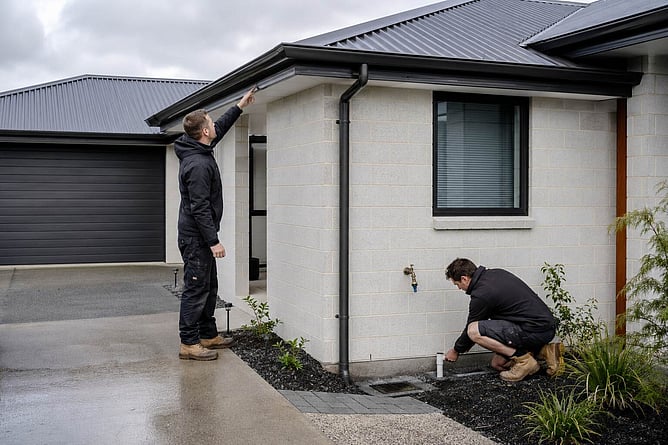
Roof drainage is often seen as a simple system. Gutters collect water, downpipes move it away, and the job is done.
In reality, roof water has a direct impact on the rest of a property. When drainage is not working properly, the effects are often felt in landscaping, soil stability, and subsurface drainage systems.
Across Waikato, where rainfall can be heavy and consistent through winter, these issues are particularly noticeable in residential properties with established gardens, paved outdoor areas, and sloped sections.
Understanding how roof water interacts with ground systems helps prevent long-term damage and costly repairs.
Roof Drainage Is the Starting Point of Water Movement
Every property has a water flow chain.
Rain falls on the roof first. From there, gutters and downpipes are responsible for directing that water away from the building.
When this system works correctly, water is controlled and directed into appropriate discharge points.
When it fails, water spills over and begins affecting areas that are not designed to handle concentrated runoff.
This is where problems often begin to spread beyond the roofline.
How Overflow Affects Landscaping
Landscaping is usually designed to handle natural rainfall, not concentrated roof runoff.
When gutters overflow or downpipes discharge water too close to garden areas, the impact can include:
soil erosion around garden beds
displacement of mulch and topsoil
damage to planted areas
pooling in low-lying sections
uneven lawn saturation
Over time, this can change how water moves across a section, creating permanent wet spots or erosion channels.
In Hamilton suburbs with heavier clay-based soils, water absorption is already slower, which can make these issues more noticeable.
The Hidden Impact on Subsurface Drainage
Many homes rely on subsurface drainage systems to manage excess water underground. These systems are designed to handle consistent, controlled flow.
However, when roof drainage is not functioning correctly, it can overload these systems with sudden or uneven water volumes.
This may lead to:
reduced drainage efficiency
slow dispersal of stormwater
pressure on soakage areas
saturation of surrounding ground layers
long-term system strain
In some cases, properties may require professional assessment of stormwater systems to ensure water is being managed correctly beneath the surface.
Drainage specialists often work with residential and commercial sites to address these types of underground drainage issues and ensure systems are functioning as intended.
Why Small Roof Issues Create Bigger Ground Problems
One of the most common misconceptions is that minor gutter issues only affect the roof.
In reality, even small inefficiencies can redirect large volumes of water over time.
For example:
a partially blocked downpipe may overflow only during heavy rain
a slightly misaligned gutter may spill water onto one concentrated area
a disconnected outlet may saturate soil repeatedly in the same spot
These small issues gradually reshape how water behaves across the property.
Once that happens, landscaping and subsurface systems begin to adapt in ways they were not originally designed for.
Soil Saturation and Long-Term Ground Movement
Excess roof runoff can significantly change soil conditions.
When soil becomes repeatedly saturated, it can lead to:
reduced structural stability in garden areas
sinking or uneven paving
stress on retaining edges
increased compaction in high-flow areas
Over time, this can also affect how efficiently subsurface drainage systems perform, especially if they become surrounded by constantly wet soil.
This is why consistent roof water management is essential for overall property stability.
Why Integrated Water Management Matters
Roof drainage, surface runoff, landscaping, and subsurface systems should not be treated as separate elements.
They are all part of the same water management system.
When one part is not working correctly, it places extra pressure on the others.
A well-functioning system ensures that:
roof water is collected efficiently
runoff is directed away from vulnerable areas
soil conditions remain stable
underground drainage can operate as designed
This reduces long-term maintenance issues and helps protect both built and natural areas of the property.
Protecting Your Property Starts at the Roofline
Many drainage issues that appear in gardens or underground systems actually begin at the roof.
Blocked gutters, poorly aligned spouting, or inadequate downpipe placement can all trigger a chain reaction across the property.
Regular maintenance of roof drainage systems is one of the simplest ways to prevent wider landscaping and subsurface issues from developing.
For homeowners looking to improve roof water performance or upgrade drainage systems, Fine Line Fascia & Spouting provides practical solutions tailored to Waikato conditions.
If you’re noticing overflow, drainage concerns, or landscaping damage linked to roof water, contact the team at Fine Line Fascia & Spouting for advice or a quote.